A British diplomat’s near-fatal encounter with dengue in Brazil has become an unwitting testament to a medical advance that could reshape global health.
Stephanie Al-Qaq, UK ambassador to Brazil, contracted dengue in December 2024 and became one of fewer than 1% of patients who develop acute liver failure (fulminant hepatitis), a complication with a 50% mortality rate.
Her survival, achieved through an emergency liver transplant in Brazil’s public health system, came a few months before the country approved the world’s first single-dose vaccine against the disease, a viral infection spread by mosquitoes.
The vaccine developed by the Instituto Butantan led by Prof Esper Kallás has significance that goes far beyond Brazil: dengue is expanding in influence because of climate change, and is expected to reach the UK in coming decades. ‘We all are all connected from a health perspective and these diseases are really not that not that far away,’ she says.
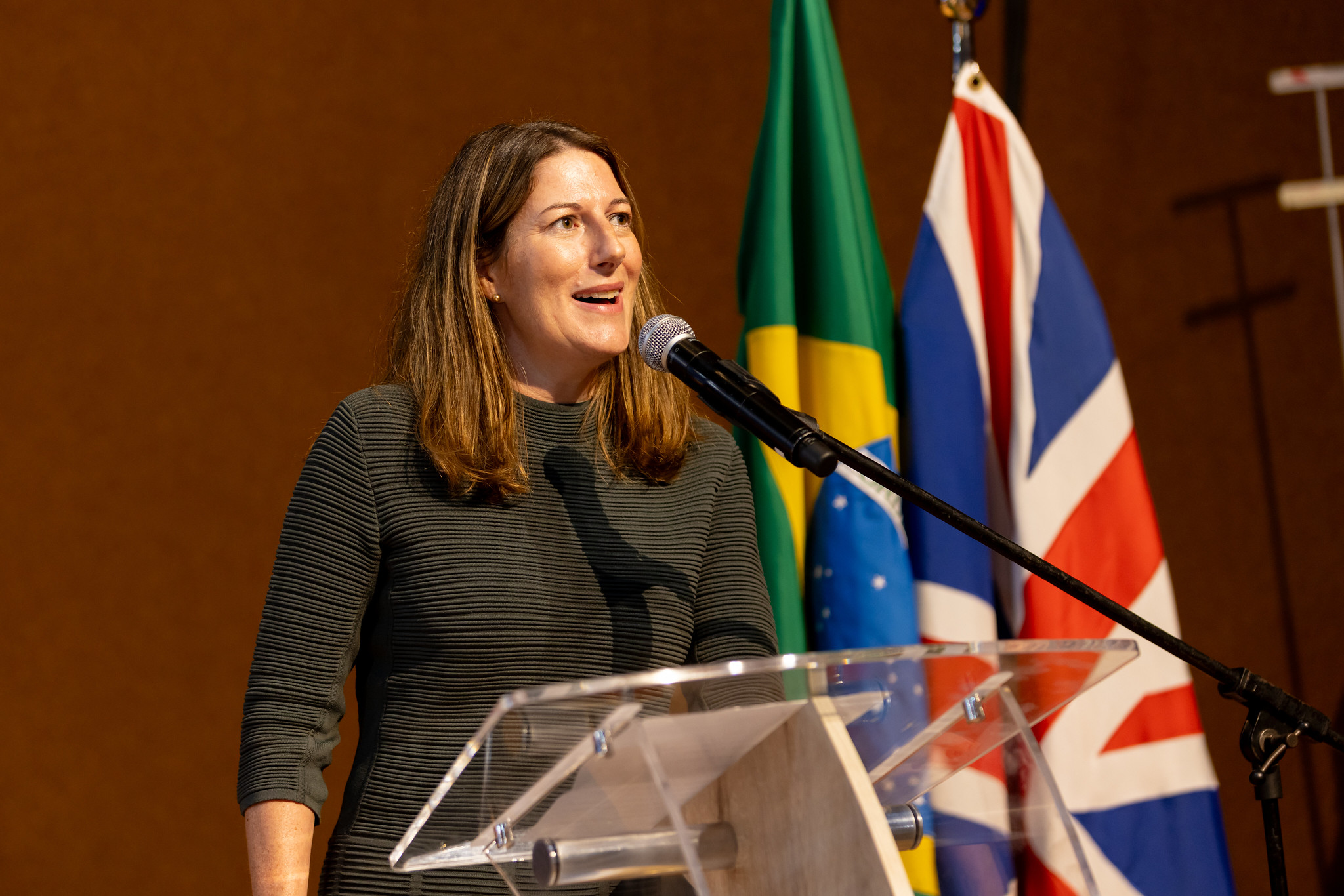
Al-Qaq is meticulous about precautions, from wearing long sleeves to using insect repellent but, even so, became infected at home in Brasília, after the G20 summit at the end of 2024. She can still point to where the mosquito bit her, on her upper arm.
At first, she thought she was just tired from her demanding schedule. She suffered a mild temperature, nothing more. But within days, she deteriorated rapidly, suffering pain and dehydration. A few days before Christmas, the strongest symptom was severe stomach-ache: her secretary thought she’d probably eaten something bad. Al-Qaq knew it felt different but soldiered on.
She couldn’t keep anything down and became severely dehydrated. Christmas Day passed in a haze and on Boxing Day morning, she woke knowing something was desperately wrong and insisted on going to the hospital.
Her blood tests revealed her ALT and AST levels – key indicators of liver function – were ‘off the chart’. An ultrasound confirmed inflammation and swelling of her liver. Her husband suggested the medical team test for dengue and it came back positive: she had developed hepatitis caused by the virus, a condition affecting fewer than 1% of dengue patients. Half of those who develop it don’t survive. When her predicament became clear, she recalls, ‘there were a lot of people running around in the hospital.’
Even in Brazil, with its extraordinary expertise on dengue, doctors rarely see such cases. A specialised team scrambled to determine the next steps, trying to assess whether her liver had any chance of recuperating. The answer was no: she would need a transplant.
Al-Qaq was placed on dialysis and plasma therapy, to deal with the build-up of toxins in her body, while waiting for a compatible organ as she drifted in and out of consciousness. She couldn’t see people clearly but could hear them, always searching for her husband’s voice or the scent of a nurse’s perfume to anchor herself to reality.
Brazil operates a transplant system modelled on the UK’s: anonymous, rigorous, prioritizing the most severe cases. Al-Qaq was at the top of the list but ‘organs came and went – they weren’t compatible or not suitable.’
On 5 January, she could feel her body slipping away, sensing a strange calmness, but her husband urged her to hang on. She spent 12 hours clutching the bed, not talking to anyone, willing herself to survive until he whispered in her ear: they had found a donor.
That night, seven hours after the donor liver was removed, she went into surgery. ‘I was able to receive a liver very quickly after the death of my donor, which is so critical,’ she says.
The operation lasted 11 hours, Brazilian doctors from SUS (Brazil’s public health system) working alongside British surgeons from the NHS: she never would have survived a flight back to the UK. The Brazilian and British lead surgeons had trained together and decided to perform joint surgery, given the risks. When they emerged on 7 January, after 11 hours, they knew they had succeeded against the odds.
After surgery, she asked her husband if he wanted to renew their vows and returned to work last February, remarkably quickly given the circumstances. However, recovery has not been straightforward. ‘Transplant patients never follow a straight line,’ she explains. She suffered a significant rejection episode at the end of 2025 following a COVID vaccine she needed for COP30, when the Prince of Wales and Prime Minister were visiting.
Brazilians call the liver the soul, Al-Qaq notes, while a British doctor at King’s College Hospital advised her to try to feel at home with her new organ. At first, she thought his suggestion she talk to her liver a little unhinged. But she does it now, as well as thanking her anonymous donor every day.
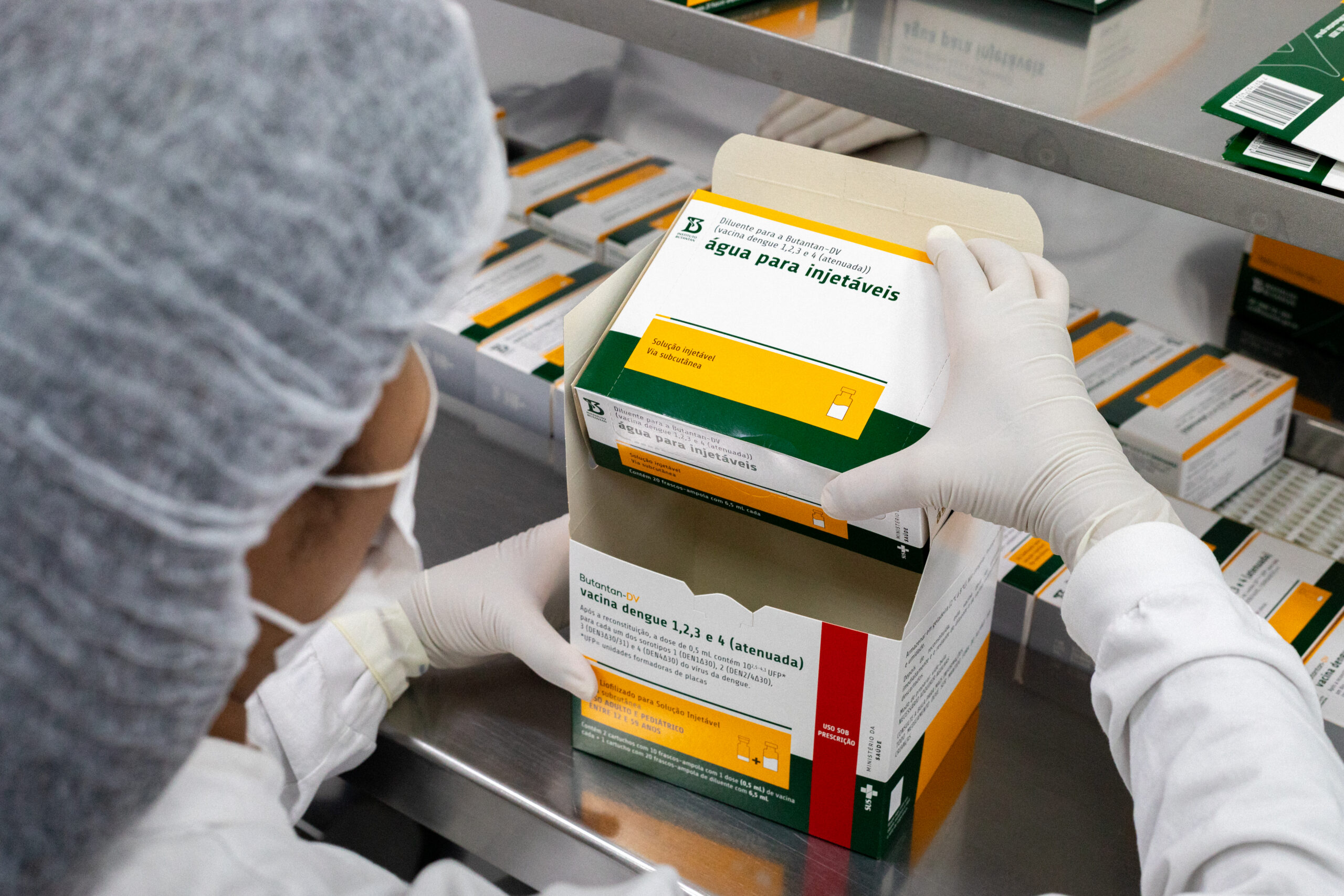
Al-Qaq’s harrowing experience came before an advance that could prevent countless others from a similar ordeal. At the end of last year, Brazil’s drug regulator approved Butantan-DV, the world’s first single-dose vaccine against all four strains of dengue virus, for use in people aged 12 to 59.
The timing couldn’t be more critical.
Brazil experienced its largest ever dengue epidemic in 2024, with 6.4 million cases and almost six thousand deaths. Prof Esper Kallás, director of the Instituto Butantan in São Paulo that developed the vaccine, said the single-dose format represents a ‘major advance.’
The only other globally available vaccine, Qdenga, is based on weakened virus and requires two doses administered three months apart – a significant barrier for indigenous populations in hard-to-reach regions like the Amazon. And it was restricted to previously infected individuals.
Evaluated for nearly a decade in trials involving 16,000 volunteers across Brazil, the new vaccine showed impressive results: 74.7% overall efficacy, 91.6% efficacy against severe disease, and, most strikingly, 100% efficacy against hospitalisations.
The Instituto Butantan has already produced more than one million doses for mass vaccination campaigns in three pilot cities to ‘understand the practicalities’, he said and population acceptance, and vaccinating 900,000 frontline dengue control workers across Brazil who visit heavily affected areas.
The institute has partnered with Chinese company WuXi to manufacture 60 million doses over the next two years. Prof Kallás expects 25 million doses to be produced and delivered in the second half of 2026, with the potential to make a significant impact on the 2027 dengue season, which runs from February until May. ‘It’s going to be a very interesting pilot vaccination campaign,’ he says.
What sets Butantan-DV apart from earlier vaccines is its versatility. Composed of four dengue serotypes, that is key kinds of dengue virus, it can be given to both those who have already had dengue and those never exposed. The single-dose format also eliminates a critical adherence problem: many people who receive a first dose never return for the second, leaving them only partially protected.
With more than 14 million dengue cases reported globally in 2024, including 12.6 million in Latin America where over 8,000 people died, demand extends far beyond Brazil’s borders. The Instituto Butantan has confirmed it will be able to supply other affected countries in the region, including Argentina, Peru, and Colombia, once Brazil’s public health system needs are met.
Prof Kallás is hopeful that mass vaccination could eventually achieve herd immunity and potentially control dengue. Mathematical models suggest this is possible, ‘but only large-scale vaccination campaigns like those in the three pilot cities will allow us to answer that question definitively.’
Ambassador Al-Qaq’s experience has made her acutely aware that if her experience, and that of COVID, have taught us anything, it is that diseases don’t respect borders. Many people think of tropical diseases like dengue as problems that happen far away, but climate change and environmental changes are expanding dengue’s reach.
Al-Qaq says that on World Neglected Tropical Diseases Day, we must ask ourselves whether we’re all interconnected. ‘The answer is yes,’ she says. With climate change pushing dengue toward temperate zones, the disease that nearly killed her in Brazil could soon be a threat in Birmingham. ‘Preparedness is key, as is collaboration.’