National Railway Museum
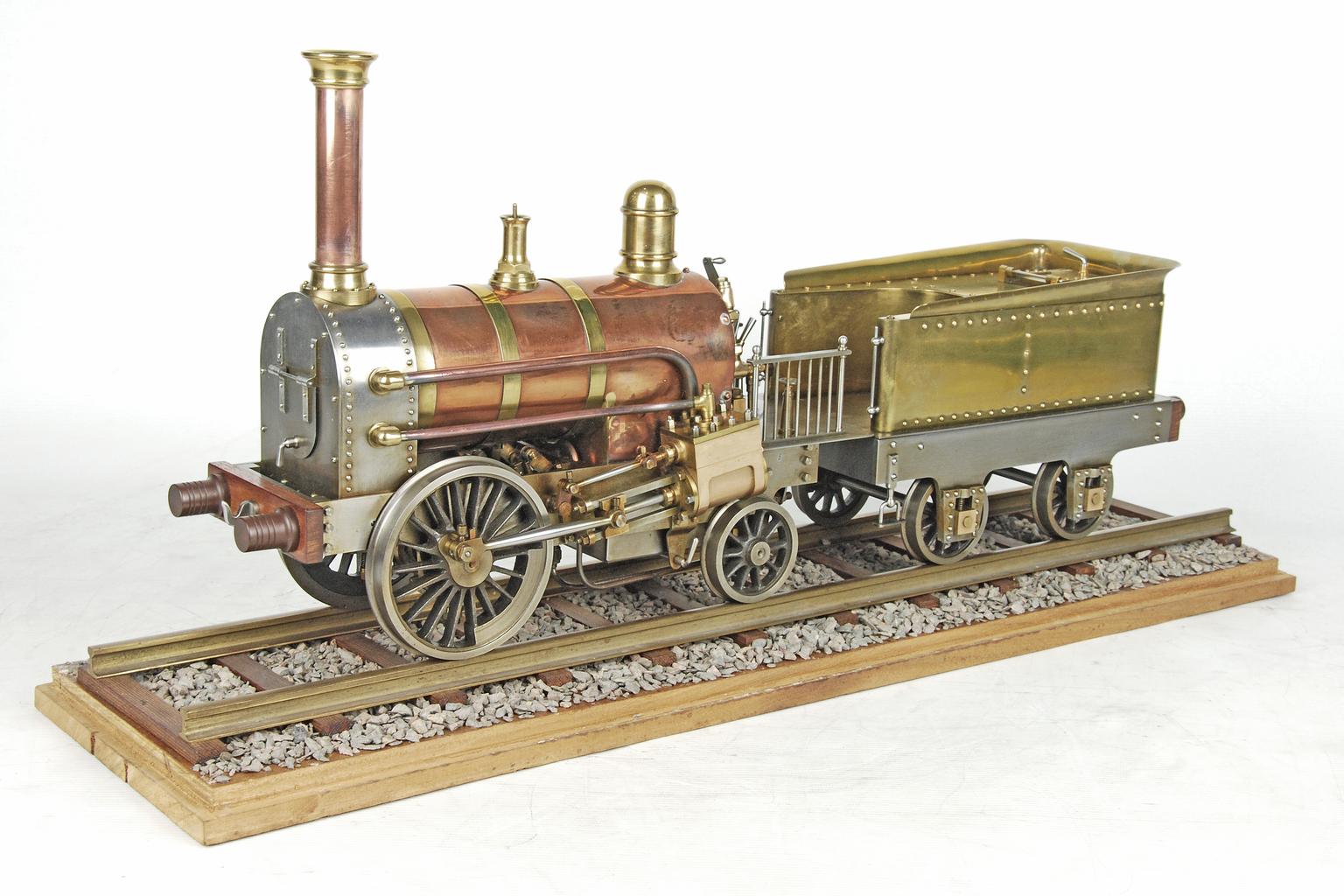
Miniature railway modelling is one of the most popular hobbies among railway enthusiasts. The art of refining railway technology to operate in smaller scales has been enjoyed by many thousands around the world. Millions more people have enjoyed the experience of being pulled around a track by one of these small wonders.
This exceptional model of ‘Rainhill’, made by Charles Thomas Wooler, London, 1943, was built shortly after renowned modeller Lillian Lawrence released plans for this Stephenson’s-Rocket-inspired locomotive in the popular magazine Model Engineer in 1941.
As a hobby, this was once the preserve of a handful of engineers, workshop apprentices, and those with means. It was the writing of Lillian Lawrence, an industrious trans woman born 1883 and also known as Curly, which made railway modelling accessible to the masses. Lillian self-taught herself engineering and made a name for herself winning the “Battle of the Boilers” in 1922, demonstrating the power of coal boilers over spirit-fired boilers.
Living her life largely through the pen, she was a shy and anxious woman. She made her career as a writer working from home, where she was cautious about who visited her. She wrote upward of 9000 articles and several books teaching the art of railway engineering to railway fans around the world, focusing on using only the tools most already had at home. Thanks to her work, and what it did to inspire and teach the hobby, many more people have been able to enjoy this pursuit, either as a maker or as passengers.
Science Museum
In the Making the Modern World Gallery at the Science Museum, we have a replica fuel element for the JASON reactor. The real reactor fuel rod was part of the JASON low-power nuclear research reactor installed at the Royal Naval College in Greenwich, London, used to educate and train military and civilian personnel involved in naval nuclear submarine propulsion.
A nuclear reactor’s primarily role is sustaining controlled nuclear fission. This is a reaction where the nuclei of atoms are split, releasing energy. Nuclear fission reactions need to be very carefully managed and controlled, as they emit radiation that can be dangerous to living organisms if they are exposed.
Nuclear Criticality is the field which is dedicated to preventing nuclear radiation accidents. A significant figure in Nuclear Criticality is Angela Helen Clayton, who had an active interest in health physics – the science of how to protect people from the effects of radiation.
Clayton was Head of Criticality Safety at the Atomic Weapons Establishment and Chair of the UK Working Party on Criticality. She played a key role in advancing safety protocols, as well as designing and developing radiation shields, reducing the risk of harm to people handling radioactive materials. Her legacy continues to improve people’s safety today.
Along with her significant contributions to nuclear physics, Angela Clayton was a passionate advocate for trans rights. As a trans woman, she experienced barriers to accessing gender-affirming care.
She wanted to create positive change for trans people in the future, campaigning with Press for Change and working towards full legal recognition for trans people in the UK. She also chaired the Gender Trust and contributed to developing the Gender Recognition Act 2004. She was awarded an MBE in June 2025 for her work on trans rights.
You can learn more about stories about pioneering LGBTQ+ scientists on the LGBTQ+ Highlights tour at the Science Museum which runs each month.
Science and Industry Museum
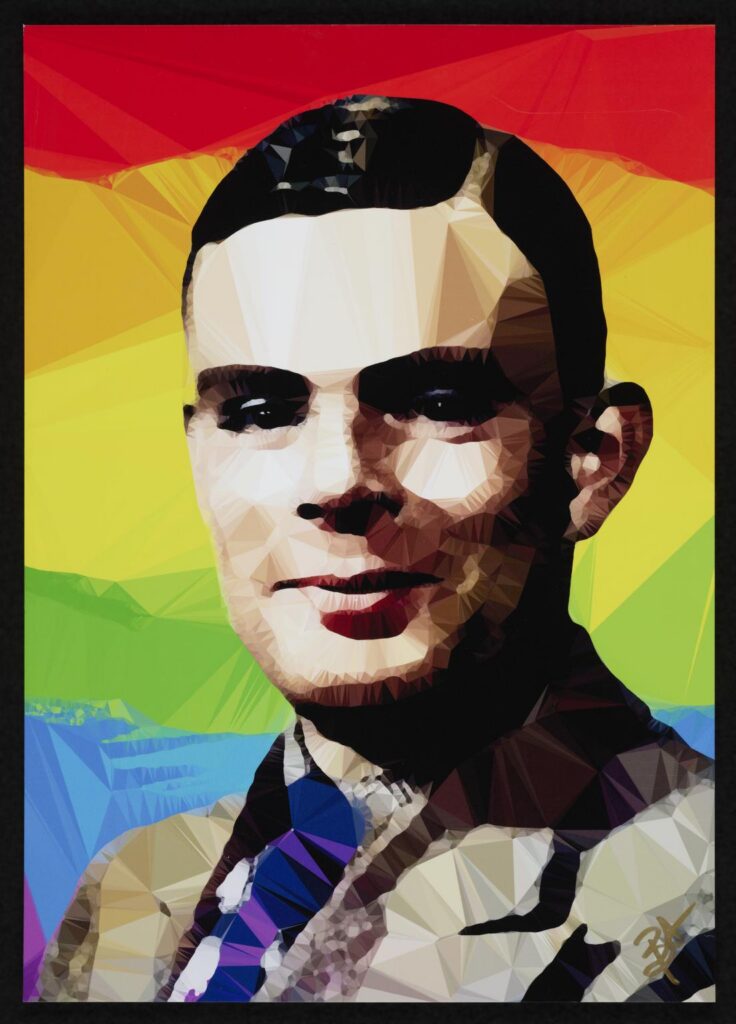
This portrait of Alan Turing, who is celebrated as one of the most influential STEM figures of the 20th century.
Turing played a vital role in the Second World War as part of the Government Code and Cypher School at Bletchley Park and his pioneering work on early computing helped develop the technology we use today. His work in Manchester helped lead to the world’s first commercially available stored program computer, the Ferranti Mark 1.
In 1952 Turing was arrested for having a sexual relationship with a man, as homosexuality was a criminal offence at the time, and he was convicted for ‘gross indecency’. To avoid imprisonment, he underwent a one-year hormone treatment – chemical castration.
He continued to work, though he was stripped of his security clearance due to his criminal record and no longer allowed to work on top secret projects.
Turning died two years later in 1954 aged just 41 from cyanide consumption. The precise circumstances leading to his death can never be known, but Turing had himself spoken of suicide and this was the conclusion of the coroner, following an inquest.
Turing was granted a posthumous royal pardon in 2013, following a years-long campaign. ‘Turing’s Law’ was then introduced three years later following further campaigning to pardon thousands of other gay men who were unjustly convicted. The Science and Industry Museum acquired a collection of material from this campaign in 2021, allowing the museum to explore a more complete story of this historical icon.
Today, Alan Turing is an important figure in Manchester’s LGBTQ+ community which is celebrated in this portrait with a rainbow background emanating the LGBTQ+ pride flag. It was made by Manchester based artist Baiba Auria in the digital medium, utilising the very technology Turing helped to pioneer.
A reproduction of this portrait, alongside objects relating to Alan Turing’s work in computing will soon go on display at the Science and Industry Museum as part of an updated display in the Revolution Manchester Gallery.
You can learn more about his ground-breaking work in Manchester here and see the Pilot ACE computer he designed on display at the Science Museum in London.
Locomotion
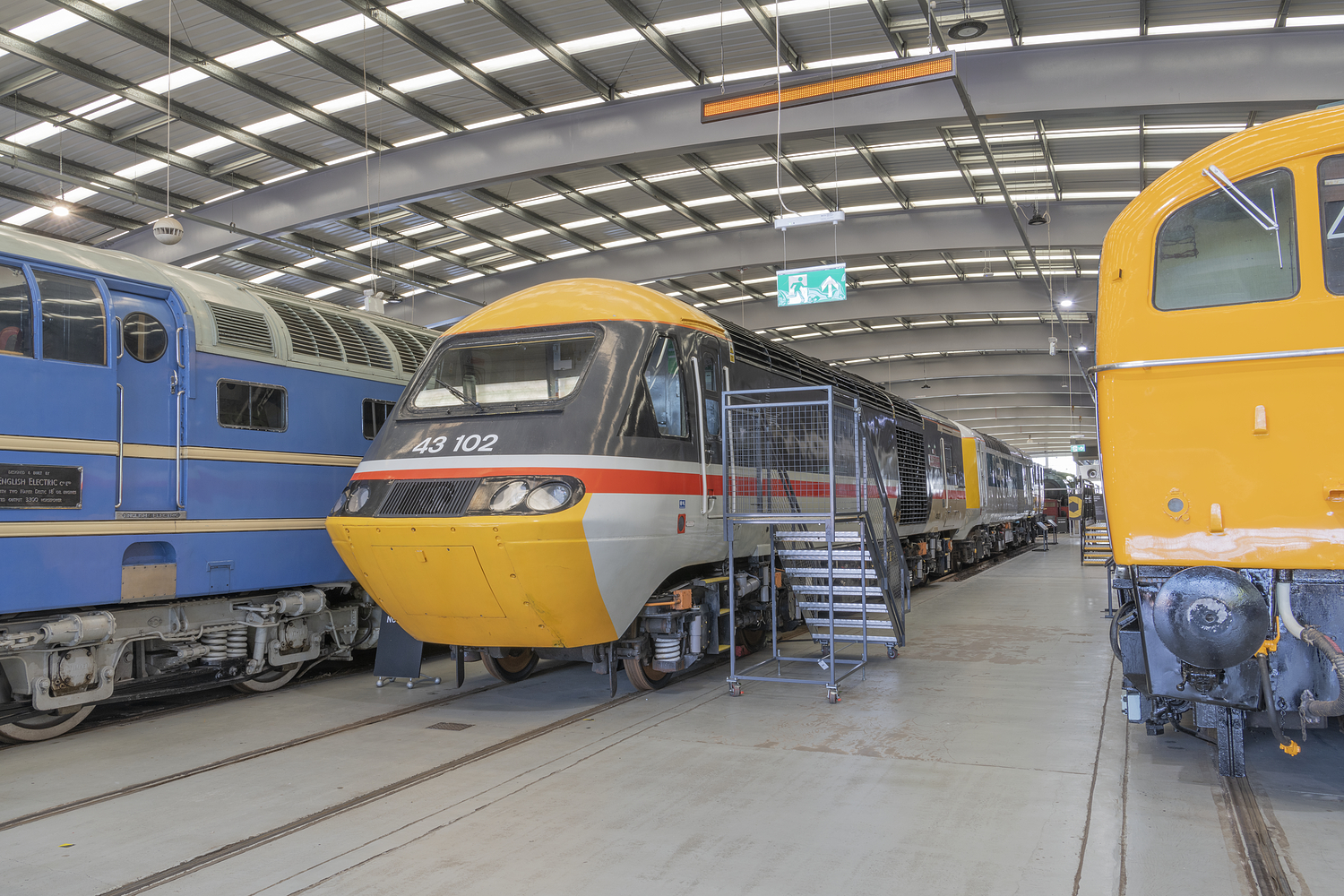
Class 43, High Speed Train (HST), or Intercity 125, is one of the most renowned objects in British engineering and railway history. It is known as the locomotive that saved Britain’s railways.
Due to the continuing loss of both passenger and goods traffic to road and air competition, by the 1960s Britain’s railways were beginning to be viewed as an old and outdated mode of transport. Rail travel times were comparatively slow by todays standard, with the highest speed express trains, often powered by the Class 55 ‘Deltic’, only able to reach 80-100 mph. To bring passengers back to rail, faster, reliable and newer trains would be needed.
Intercity 125 was BR’s answer. Reliably able to travel at 125 mph, shortening many intercity journeys by upwards of an hour. The innovation that enabled this was advocated for and designed by Ron Whalley, a young electronics engineer with Davies & Metcalf. Despite concerns from senior engineers about the reliability of electronics, he realised they needed to evacuate the brake pressure faster down the length of the train to trigger the brakes quicker, a feat that could only be done with electronics.
Whalley advocated for a modern system, with an electronic control unit on each vehicle and full blending with the traction motors for maximum energy recouperation. Due to the reservations about electronics this was not achievable at the time, so he instead designed a simpler system, allowing the brake pressure to evacuate from both power cars simultaneously with electronics. Whalley ‘s innovative system is still in use on surviving HST’s today.
As a gay man in a long-term relationship with another man in the 1970s, Whalley had to live a double life. He faced constant negative comments about gay men and was unable to live openly with his partner (you can hear directly from Whalley about his experiences here).
Whalley overcame tremendous adversity to bring Britain one of the most important innovations in saving the country’s railways.
National Science and Media Museum
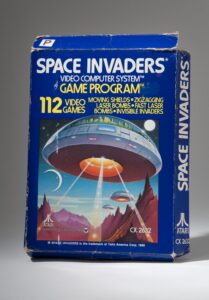
Rebecca Heineman was a pioneering video game designer and producer.
In 1980 she became the first ever winner of a national US video game tournament playing Space Invaders on the Atari 2600. She became a game programmer aged just 16 and worked in the industry for the next four decades.
Heineman’s contributions to the gaming industry were extensive and included co-founding Interplay Productions (now Interplay Entertainment), best known for creating the Fallout series.
She also contributed to the work of industry giants such as Amazon, Sony and Microsoft, for whom she helped develop the Kinect which you can see on display in the Sound and Vision galleries at the museum.
In 2003, Heineman came out as transgender. In the 2020 Netflix documentary High Score, she revealed one of the reasons she was drawn to video games at a young age was the ability to be herself and play as a female character. She was dedicated to making the gaming industry an inclusive space for the LGBTQ+ community and sat on the board of directors for GLAAD, an American LGBTQ+ rights organisation focused on representation in media. She was married to Jennell Jaquays, a fellow game designer, trans woman and activist. Jaquays was the creative director for the Transgender Human Rights Institute in Seattle and campaigned to outlaw conversion therapy for LGBTQ+ youth in America.
Heineman passed away in November 2025. Her legacy in the gaming industry is monumental, contributing to over 60 games which will continue to be played and enjoyed for many years to come.
These stories are just a snapshot of LGBTQ+ stories connected to our collection and museums. If you’d like to find out more, we have a range of online content exploring LGBTQ+ history, including:
- Seeing Things Queerly – Science Museum Blog
- Magnus Hirschfeld and the Institute for Sexual Science – Science Museum Blog
- History of the Gay Village and LGBTQ+ nightlife in Manchester | Science and Industry Museum
- Alan Turing in Manchester | Science and Industry Museum
- A little LGBTQIA+ railway history – National Railway Museum blog
- Hidden Stories of Engineering: The LGBTQIA+ German immigrant who became one of Britain’s leading engineers – National Railway Museum blog
- Scream it Out Loud: A Brief History of LGBTQ+ Horror – National Science and Media Museum blog
- Iconic LGBTQ+ animated TV moments – National Science and Media Museum blog