It is with great sadness that we share news of the death of Sir Neil Cossons, an authority on industrial heritage, historian and Director of the Science Museum from 1986 – 2000. Sir Neil was the first Director of the Ironbridge Gorge Museum Trust, Director of the National Maritime Museum and Chairman of English Heritage, during a long career promoting Britain’s scientific and industrial heritage that spanned half a century.
Sir Neil left a transformed Science Museum in 2000 as the then longest serving Director, a record only recently surpassed by our current Director and Chief Executive, Sir Ian Blatchford, who shared his reflections on Sir Neil’s legacy:
‘Neil had a profound impact on the Science Museum, ushering in an era of change and bringing a strong focus on effective interpretation for visitors, with interactivity at its heart. His legacy can be seen around the museum to this day, and I will be forever grateful for the steadfast friendship and wise counsel which Neil offered throughout my time at the museum.’
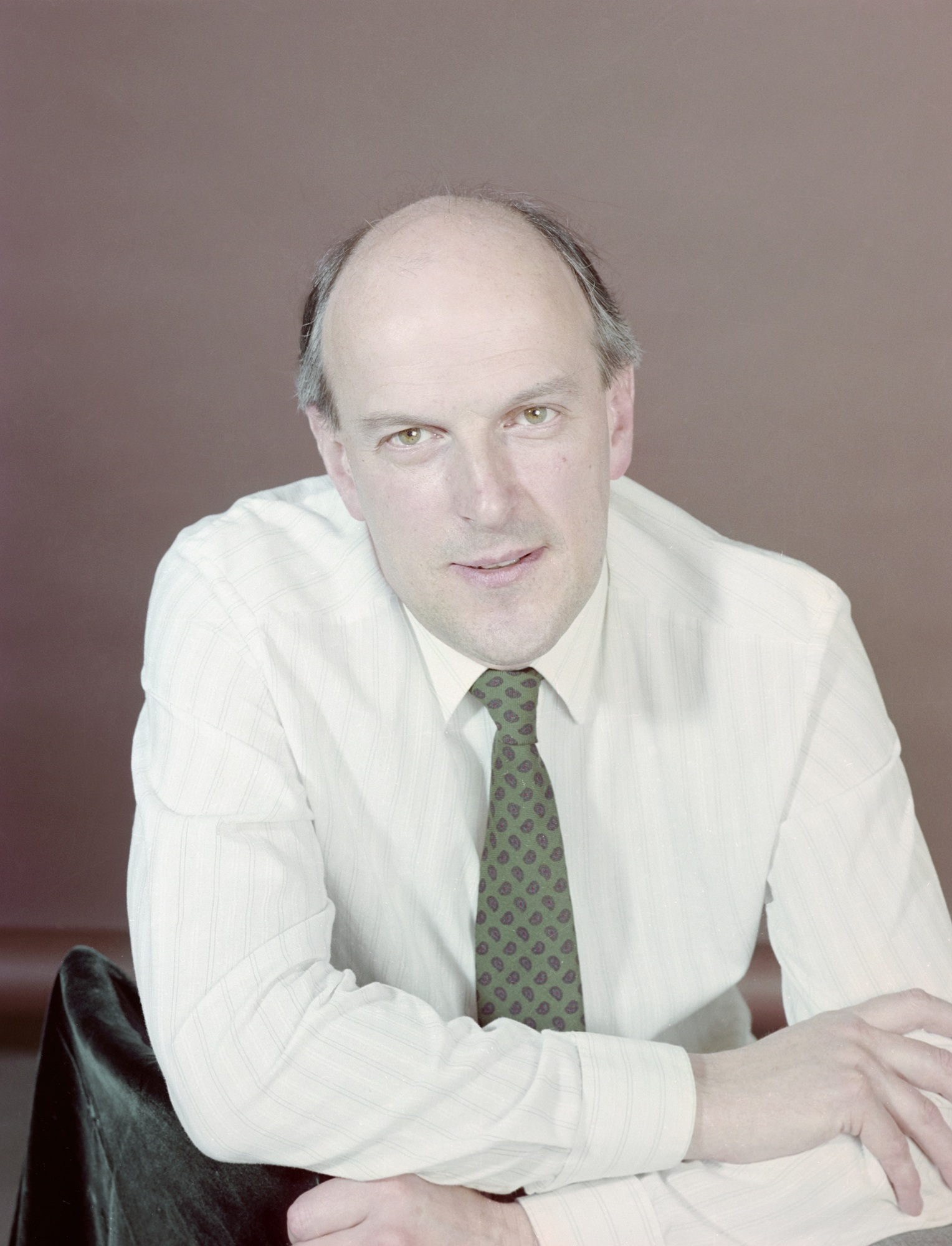
Just three months after Cossons’ appointment as Director of the Science Museum in 1986, the ‘hands-on’ interactive gallery Launchpad opened. While this gallery was the initiative of Cossons’ formidable predecessor, Dame Margaret Weston, it heralded the reforming spirit of Sir Neil’s decade and a half as Director.
Cossons was keen to embrace changes taking hold in the wider museum sector, such as the move to a more open and audience-focused approach to developing exhibitions and galleries. An emphasis on effective interpretation for visitors – with interactivity and a variety of media used to achieve this – was central to Cossons’ philosophy as Director, an approach guided by audience research on the most effective means of communicating science and technology to the public. Cossons proposed a new type of museum professional – whom he once described as ‘curator-interpreters’ – to deliver engaging future exhibitions, and while the name did not stick, the fruitful partnership between curatorial and interpretation teams is fundamental to the success of today’s galleries and exhibitions.
In light of reduced Government funding at the time and the approach of other major museums, Cossons introduced admission charges for the museum which remained in place until charges were abolished for national museums in 2001. With constrained funding during his early tenure, Cossons’ initial proposal to reorder the museum’s displays thematically was abandoned in favour of a more pragmatic approach, creating individual galleries (such as The Challenge of Materials and Health Matters) that, thanks to his drive to be more audience-focused, were closer to galleries we might recognise today.
However, Cossons’ wider ambitions did bear fruit through the West Hall extension, with five new galleries, a café and what was at the time the largest IMAX screen in the UK opening in 2000. This had a lasting and transformational impact on the museum and was only possible thanks to support from the Wellcome Trust and a new source of funding for cultural and heritage institutions: the National Lottery Heritage Fund.
Developing these spaces required the closure of some well-loved displays and would usually involve placing objects into temporary storage before their later return to public view. Instead, Cossons saw the opportunity for an audacious international loan. Invited to contribute to Festival UK ’98, a year-long event promoting British culture in Japan, the Science Museum loaned some of its national treasures: historic and rare objects never seen outside the country before, including Crick and Watson’s DNA model, Newton’s telescope and Stephenson’s Rocket.
Over six months and across three cities, Treasures of the Science Museum was both a highly popular exhibition and a successful demonstration of international cooperation. Strengthening cultural links between the two nations, the experience also cemented close personal ties between Cossons and Japan – a country whose own industrial revolution he felt had a deep connection to our own.
Back in the UK, the West Hall galleries and the creation of Making the Modern World, a huge new gallery on the ground floor, marked a step-change in the history of the Science Museum and reflected both interactive science centres and more traditional, object-rich museums.
Whereas Making the Modern World explored the science and technology of the last 250 years, featuring icons of the Industrial Revolution among the 2,000 objects on display, the West Hall was portrayed as a “breathtaking theatre of contemporary science”. Filled with interactive exhibits and guided by audience research, the West Hall had galleries devoted to cutting edge biomedicine and information technology, which shared space with art, rapidly-changing contemporary science displays and an interactive area for the museum’s youngest visitors.
This vast new addition reflected what Cossons considered the Science Museum’s key purpose – to preserve, record and educate – and this effective template, a quarter of a century on, continues to engage visitors. His interests while Director are reflected in his portrait, painted by artist-in-residence Keith Holmes and part of the collection. The opening of the West Hall in the summer of 2000 coincided with Cossons’ retirement, leaving after 14 years (and a Knighthood) as the then longest serving director of the Science Museum.
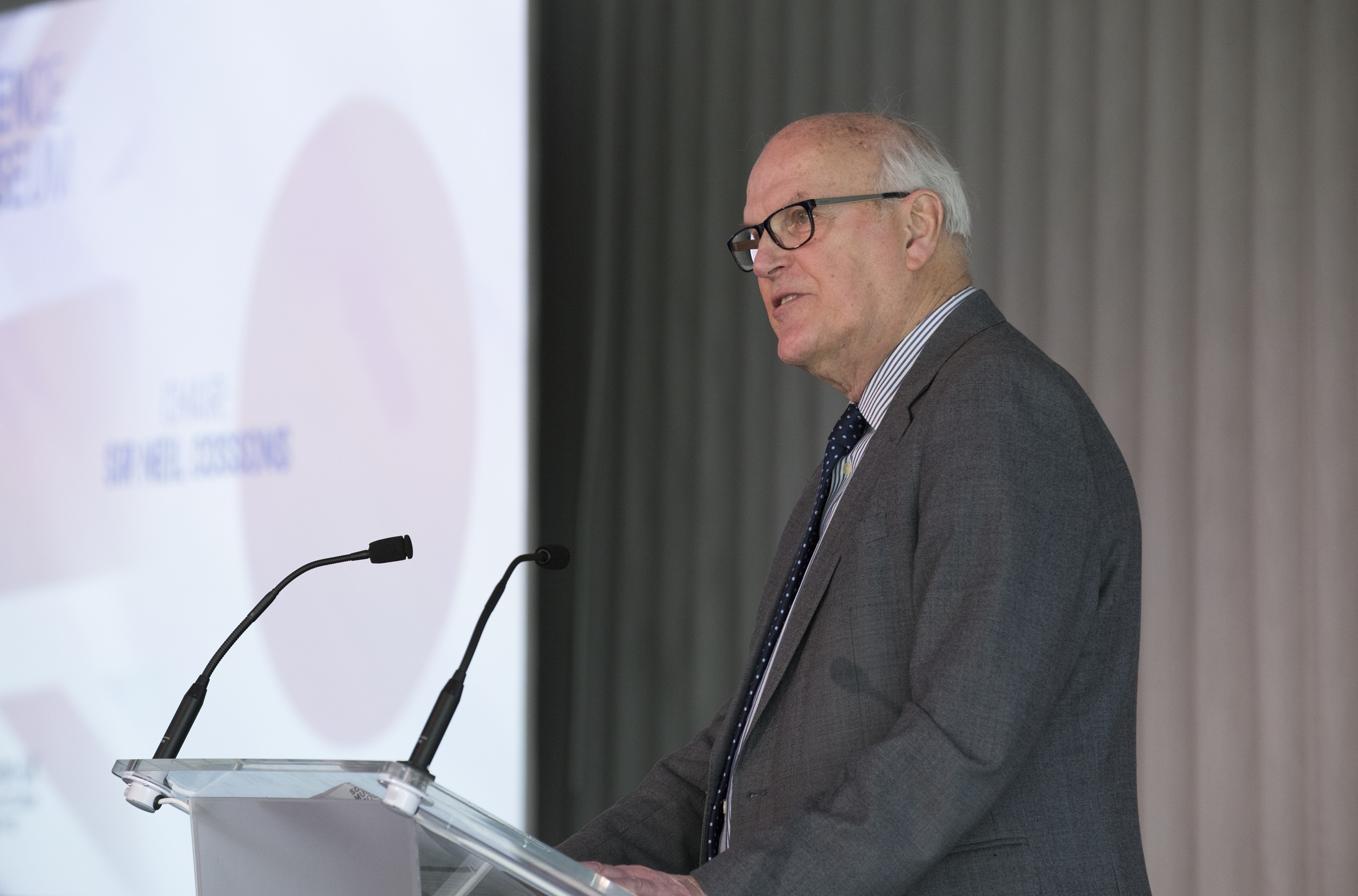
Neil Cossons was born on 15 January 1939 in Beeston, Nottinghamshire. He was the son of Arthur Cossons (1893-1963) and Evelyn, née Bettle (1912-1986). Evelyn was a teacher, while Arthur was head of the local Church Street Junior Boys’ School and a keen local historian. His dad’s enthusiasm proved hugely influential on Cossons’ choice of subsequent career, with his sister Hilda also spending her working life in museums.
Cossons was fascinated by Liverpool’s bustling industry and transport systems and had a long association with this “magical” place. In 1958 after leaving the Henry Mellish Grammar school in Nottingham, he began studying at the University of Liverpool, graduating with a degree in Geography in 1961. It was there he met Veronica Edwards, a fellow Geography student. They married in 1965 and went on to have three children: Nigel, Elisabeth and Malcolm.
As a student in Liverpool, Cossons bought a £1 share to help preserve one of the city’s old trams. The venture succeeded and the vehicle is now on display at the National Tramway Museum. In the years that followed graduation Cossons further immersed himself in Britain’s industrial landscapes, which were increasingly neglected or on the verge of being lost forever. Fortunately, there were others who shared his concerns and throughout his twenties and thirties Cossons found common cause with a growing group of people in the preservation, interpretation and promotion of “the material heritage of our contemporary culture”.
His museum career progressed rapidly. After two years as a graduate trainee at Leicester Museum, Cossons worked at the Swindon Railway Museum before joining the Bristol Museum as Curator of Technology in 1964.
Four years later, aged 29, he was appointed Deputy Director of Liverpool Museum, before in 1971 becoming the first Director of the Ironbridge Gorge Museum Trust. Cossons now found himself at the birthplace of the Industrial Revolution, noting that the gorge stood “with ancient Egypt, Athens and Rome as a place of outstanding significance in the evolution of Man and as such demands the most thoughtful attention and detailed care.”
For Cossons, the most crucial things that needed saving were the sites and items of worldwide importance relating to the Industrial Revolution. During twelve years in the post, he oversaw the preservation of industrial sites and material threaded throughout the gorge and the transformation of the site into the internationally significant attraction seen today. In 1986 the Ironbridge Gorge became one of the first locations in the UK to be designated as a UNESCO World Heritage Site. That year, in March 1986, Cossons joined the Science Museum as Director, after a three-year stint as Director of the National Maritime Museum in Greenwich, London.
Following a decade and a half at the Science Museum, Cossons was appointed Chair of English Heritage in 2000, a position he held until 2007. During this time, he oversaw numerous projects, including the return of the SS Great Britain to Bristol and the establishment of the Chatham Historic Dockyard Trust.
Cossons was also a member of the National Heritage Memorial Fund / Heritage Lottery Fund Board and held an advisory role on industrial heritage conservation for the government of Japan, receiving The Order of the Rising Sun in gratitude for his supportive work.
Acknowledged internationally as a leading authority on museums and industrial heritage, Cossons wrote books and articles on these topics throughout his life, noting that running a museum was “a sort of adventure in which you’ve got to stay ahead of the game”.
He received many accolades, including honorary doctorates and visiting professorships. In 2019, nearly two decades after he retired from the institution, Sir Neil was awarded a Fellowship from the Science Museum Group in recognition of his outstanding record of promoting Britain’s scientific, engineering and industrial heritage.