The nineteenth century feared infection. The twentieth learned to dread heart attacks. The twenty-first has become preoccupied with cancer, a side effect, in large part, of the welcome fact that we are living longer.
Medicine’s greatest successes, however, have often come not from treating disease but prevention. Long before a patient suffers a heart attack, a simple blood test can reveal high cholesterol and identify people who could benefit from statins.
Now the same can, in theory, be done for lung cancer, the world’s deadliest malignancy, following research by scientists at the Francis Crick Institute and University College London, published today in the journal Cell.
The team has identified a signature of 14 proteins in the blood that can predict lung cancer risk more than five years before diagnosis. More remarkably still, the work points towards a way of identifying the people most likely to benefit from drugs that could prevent the disease from taking hold in the first place.
Tej Pandya, Clinical PhD Student at UCL and visiting scientist at the Francis Crick Institute, said: “We have funding to develop the test for patients and it could be available in the next couple of years to find patients that are at high risk. The hope is we can use this test to select high risk patients for clinical trials to prevent the disease.”
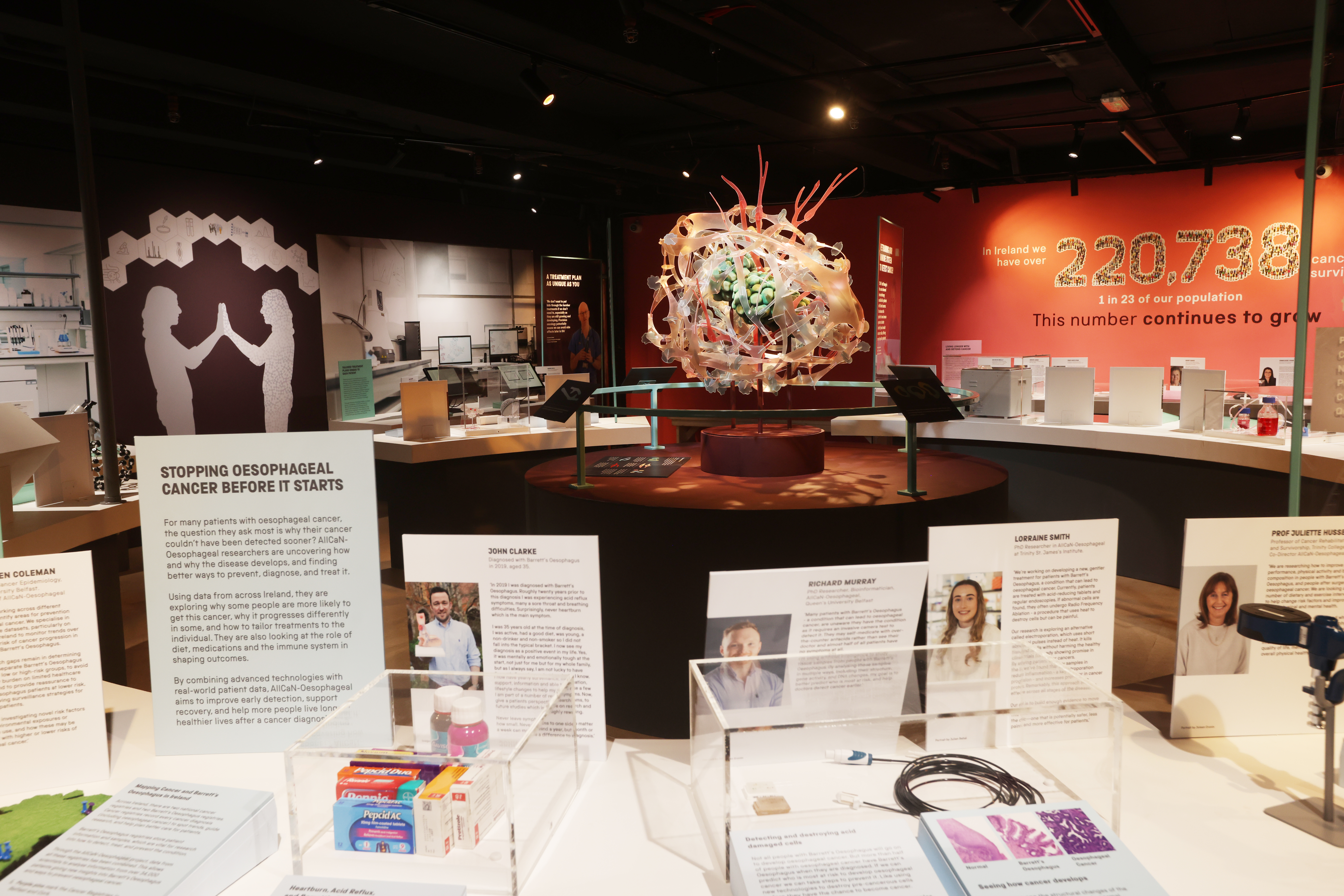
The study is led by Prof Charles Swanton, clinical research director at the Francis Crick Institute, who last month was elected a Fellow of the Science Museum Group in recognition of his leadership of the TRACERx project, which featured in the group’s Cancer Revolution exhibition, and his contributions to understanding cancer evolution.

The new work represents a natural extension of questions raised by TRACERx, which for more than a decade has collected comprehensive genomic and clinical data from people with non-small-cell lung cancer (NSCLC), following them from diagnosis through treatment to understand how tumours evolve, spread and evade therapy.
The project transformed our understanding of cancer by revealing how tumours diversify, compete and adapt over years or even decades. The new study answers the obvious corollary of this work: what are the earliest biological signs that the process has begun?
The mutation myth
For years, cancer biology has focused on mutations, spelling mistakes in the DNA recipe of cells. As we age, our cells accumulate genetic changes, some of which have the potential to drive cancer, when an individual cell multiplies out of control.
But mutations are not the whole story because most of us harbour cells carrying cancer-causing mutations without ever developing a tumour.
Increasingly, Prof Swanton and colleagues have argued that inflammation may provide that missing ingredient. Their earlier work showed how air pollution can trigger the release of an inflammatory molecule called interleukin-1 beta (IL-1β), which can awaken otherwise dormant cells carrying cancer-driving mutations.
Pollution, cigarette smoke and other environmental insults may therefore act not by creating mutations alone but by triggering inflammation that allows mutant cells to flourish.
In the new study, funded by Cancer Research UK, The Francis Crick Institute, Rosetrees Trust and the Mark Foundation for Cancer Research, researchers applied a form of AI to blood plasma data from UK Biobank, which tracks the health of more than half a million participants.

Using matched cancer registry records to identify those who later developed lung cancer, they searched for biological signals that appeared years before diagnosis in this group of 48,000 volunteers.
Using machine learning as an experiment, which can spot patterns, they identified 14 proteins that, alongside factors such as age, smoking history and previous lung disease, could predict the development of lung cancer within five years.
Elevated levels of the signature were consistently associated with future lung cancer risk, with components of the signature elevated in one cohort of people who had never smoked at all. Tej Pandya said: “It has been incredible to validate it across eight global datasets with more than 80 collaborators on five continents.”
But, although AI identified the pattern, it took luck and hard work to figure out why this protein signature was important. The luck came because studies by another lab member of mice exposed to pollution hinted that the genes in the signature did not come from cancer cells at all.
Instead, the signature reflects an unhealthy inflammatory state in the lung that appears years before cancer develops. Tej Pandya said it took another two years to turn this into detailed understanding, a distinctive cellular state that emerges when lung tissue is repeatedly damaged. They call these “KAC” cells. Different lung cell types, carrying different mutations, appear to converge on this same state during their journey towards cancer.
Exposure to air pollution increased both the number of KAC cells and the 14-protein signature. Blocking the inflammatory molecule IL-1β in mouse models reduced the number of KAC cells and slowed early tumour development. Follow up experiments showed that components of the signature were induced by IL-1β.
Now the following picture has emerged: pollution promotes inflammation; inflammation expands the KAC population; KAC cells are associated with cancer development; and all three are linked to the blood signature that provides early warning of cancer.
The team also found that blocking IL-1β in mice exposed to pollution reduced the number of KAC cells and slowed early tumour development, suggesting anti-IL-1β drugs could prevent lung cancer in people whose lungs are showing this inflammatory signal.
The signature was also elevated in people who later developed chronic obstructive pulmonary disease (COPD) or idiopathic pulmonary fibrosis, suggesting it may capture a broader inflammatory condition that precedes several lung diseases.
Many age-related illnesses may share common biological roots before they diverge into distinct diseases. If so, inflammation could represent not merely a symptom but a common starting point.
The CANTOS twist
An unexpected connection with heart disease emerged. Nearly a decade ago, a cardiovascular trial called CANTOS tested canakinumab, a drug that blocks the inflammatory molecule IL-1β. Researchers noticed an intriguing side effect: patients receiving the drug seemed less likely to develop lung cancer.
The new study revisited those data: analysing 4,651 participants, the researchers found that the protective effect was concentrated among individuals who already had a high 14-protein signature when entering the trial. In that group, lung cancer risk was almost halved over the five years of the clinical trial.
More importantly, identifying the right patients transformed the economics of prevention. The number of people who would need to be treated to prevent one case of lung cancer fell to 55, a figure comparable to many accepted preventive interventions in cardiovascular medicine.
“I hope we are approaching a similar moment that cardiology experienced decades ago with statins,” said Tej Pandya. “However, it has not been straightforward because, unlike heart disease, there has not been so much emphasis on prevention in drug trials in oncology.”
He added that the findings could be important in other diseases where chronic, age-related inflammation plays a key role, including heart attacks and strokes.